The Gulf Beyond the Skyscrapers: Mud Palaces, Petra's Nabataean Cousin, and a City Built From Coral
Most people picture the Gulf as one image: glass towers rising out of the desert. That skyline is real, but it's also the least interesting thing happening in Saudi Arabia, the UAE, and Qatar right now. Underneath the skylines is a region quietly restoring — brick by brick, tomb by tomb — a version of itself that predates the oil, the towers, and the tourism campaigns by centuries. This is a guide to that other Gulf.
The Mud City That Founded a Kingdom
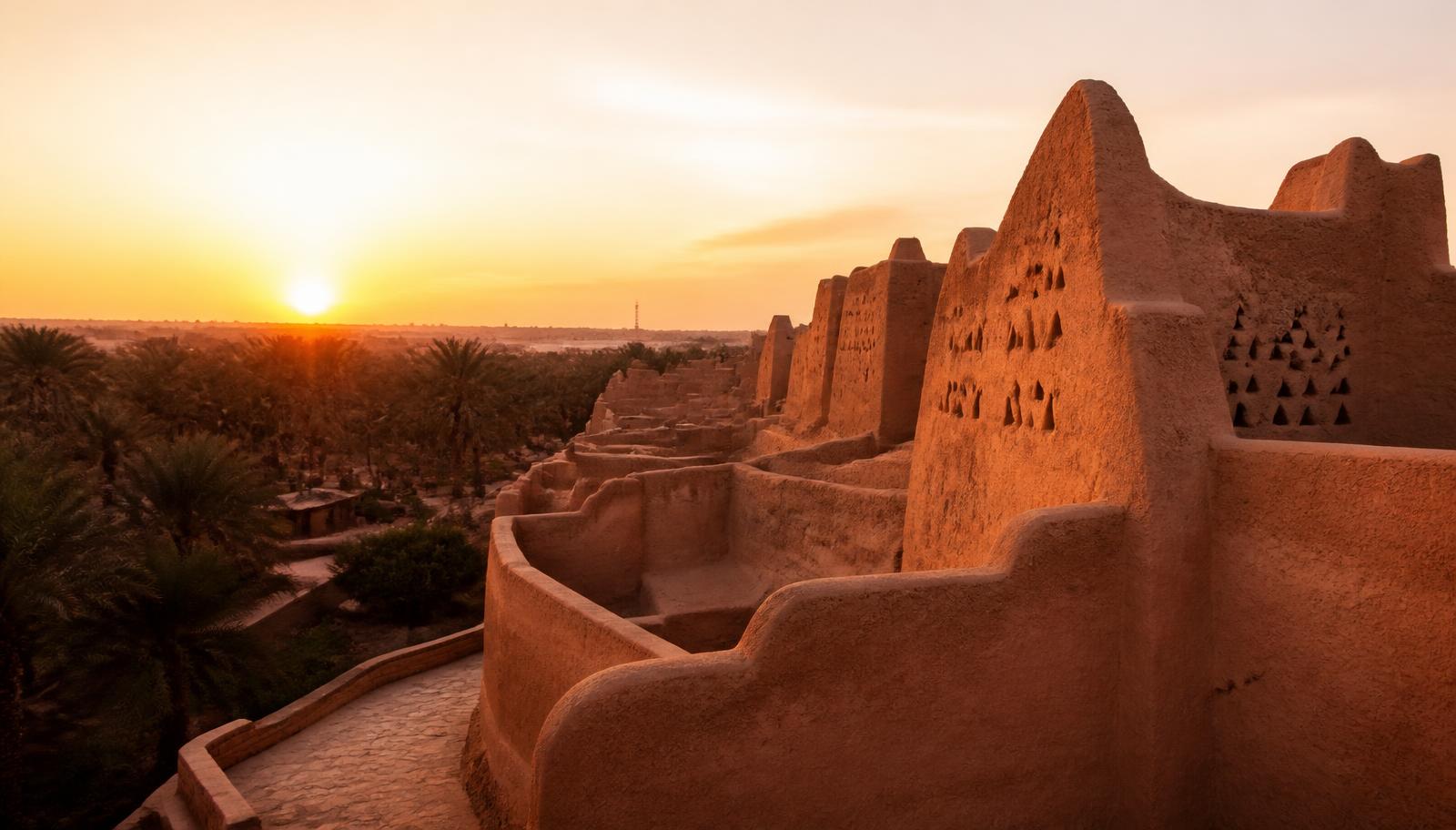
Twenty kilometers northwest of Riyadh, on the banks of a valley called Wadi Hanifah, sits a walled city built entirely from earth. At-Turaif, in the district of Diriyah, was raised from adobe mud in the 1700s — no stone, no imported material, just packed earth shaped into thick, sand-colored walls that still stand three centuries later. This was the birthplace of the First Saudi State, founded in 1727, and the seat from which Imam Muhammad bin Saud forged the alliances that eventually became the modern Kingdom.
What makes At-Turaif remarkable isn't just its age — it's how completely the architecture explains the place it was built for. Najdi-style construction wasn't decoration; it was survival engineering. Thick mud walls absorb heat by day and release it slowly at night, keeping interiors livable through brutal desert swings. Narrow, winding alleys create shade at street level. Courtyards turn inward, private and cool, while the exterior stays fortress-plain. Every architectural choice here is a direct response to sun, siege, and scarcity — which is part of why UNESCO inscribed it as a World Heritage Site in 2010, and why the Saudi government has poured resources into restoring more than twenty of its structures since.
Walk it at golden hour, when the low sun turns the mud walls the color of embers, and cross the wadi to Al-Bujairi where lantern-lit lanes now hold some of Riyadh's best restaurants, many with a direct sightline back to the palace that started it all.
Petra's Nabataean Cousin, and Almost No One Has Heard of It
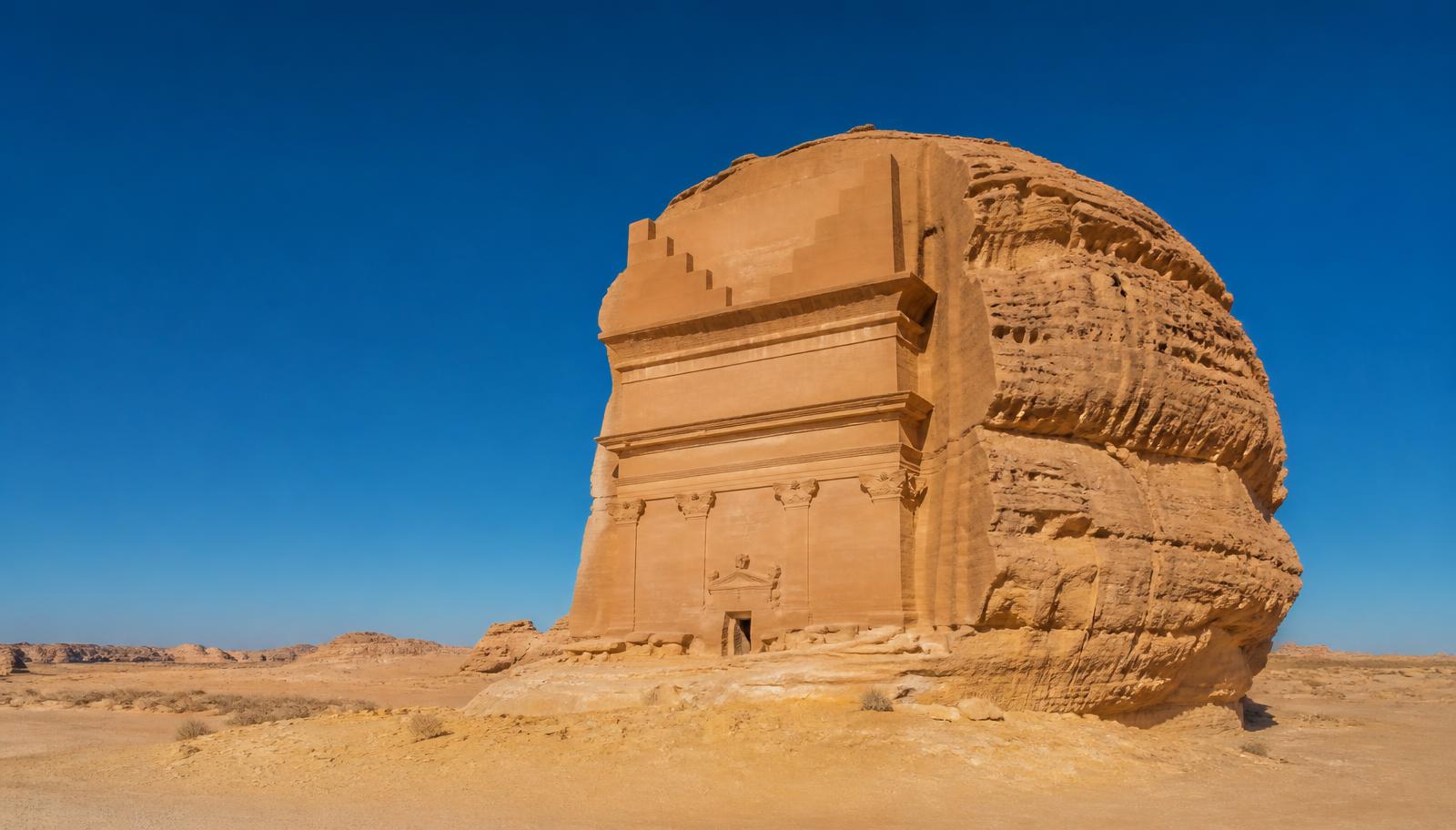
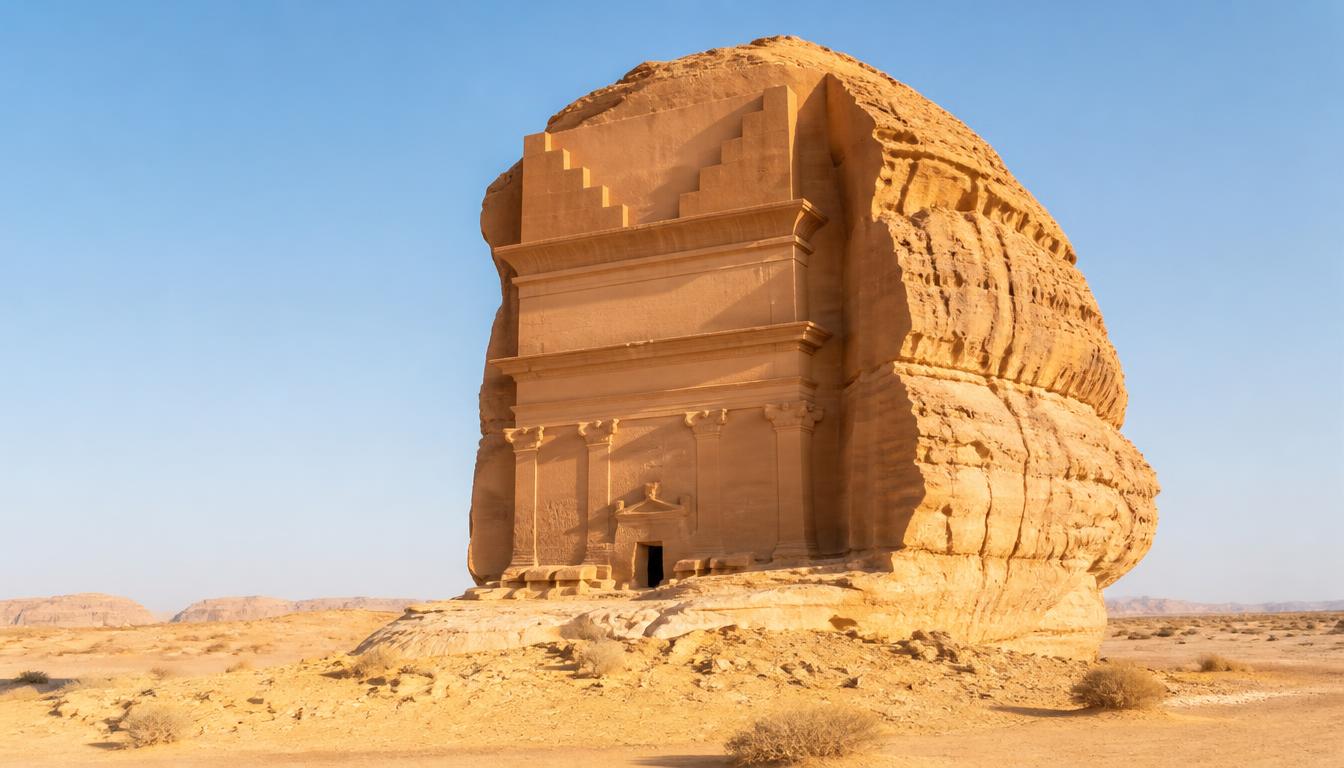
Here's the fact that should be far better known: Hegra, in northwest Saudi Arabia, was also built by the Nabataeans — the same civilization behind Petra, roughly 500 kilometers north along the same ancient incense-and-spice trade route that once linked southern Arabia to the Mediterranean. Historians generally place Hegra as a major secondary Nabataean center that flourished after Petra's rise, though the precise sequence of settlement across the kingdom's sites is still debated among archaeologists. What's not in dispute is the shared craft: the same mastery of carving monumental tombs directly into sandstone cliffs, the same genius for desert hydraulics (Hegra alone has over 130 wells cut into rock).
Hegra is Saudi Arabia's first UNESCO World Heritage Site, inscribed in 2008, and by most travelers' accounts it remains far quieter than Petra — the site has only recently opened to sustained archaeological excavation, and much of it is still being studied rather than fully developed for tourism, which for now makes a visit feel closer to discovery than to a well-trodden circuit. Of its 111 monumental tombs, 94 are decorated with facades that took master stonecutters months to carve. The centerpiece, Qasr al-Farid — the "Lonely Castle" — stands 22 meters tall, carved from a single standalone rock, and unlike almost anything comparable elsewhere, it's unfinished: you can see the exact tool marks where the ancient masons stopped work, a frozen moment from two thousand years ago.
For anyone who has stood at Petra's Treasury shoulder-to-shoulder with a crowd, Hegra offers something rarer: the same architectural language, the same civilization, considerably more room to take it in.
Jeddah's Coral City
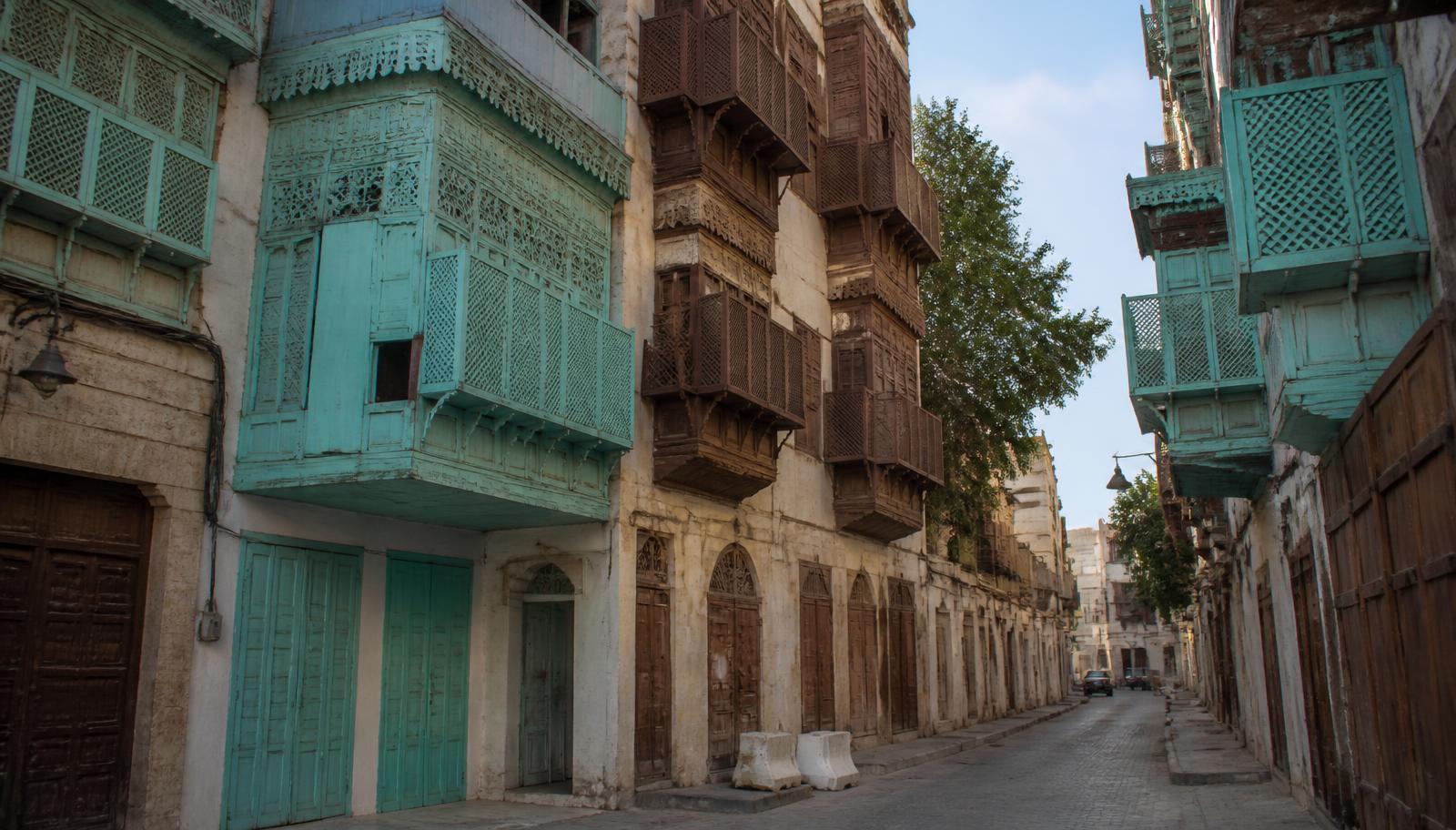
On the Red Sea coast, Jeddah's old town — Al-Balad — was built from something no other Gulf city used at scale: coral stone, harvested from the reef just offshore and stacked into homes four and five stories tall, their facades wrapped in elaborately carved wooden window screens called rawashin. For over a thousand years this was the gateway for pilgrims arriving by sea en route to Mecca and Medina, and the merchant wealth that passed through it built a district unlike anything inland — Ottoman, African, and South Asian influences all folded into the same coral-and-timber streetscape.
Al-Balad is compact enough to walk in an afternoon but layered enough to return to for days. The Naseef House, a merchant mansion where King Abdulaziz once stayed, anchors one corner; a scatter of small museums and restored merchant homes fill in the rest. Visit at night, when the heat breaks and the alleys fill with the smell of grilled meat and cardamom coffee, and the coral walls — bone-white by day — take on an almost lunar glow under string lights. Go during Ramadan if you can: daylight hours turn noticeably quieter and more contemplative through the district, and then, after iftar, the alleys fill back in — markets, vendors, and families out well into the night in a rhythm that feels distinct from the rest of the year.
Stay Connected Across the Gulf
Skip roaming fees. Get instant eSIM data in Saudi Arabia, Qatar, the UAE, and 190+ countries.
Get Your Middle East eSIM →Doha's Quiet Argument With Its Own Skyline
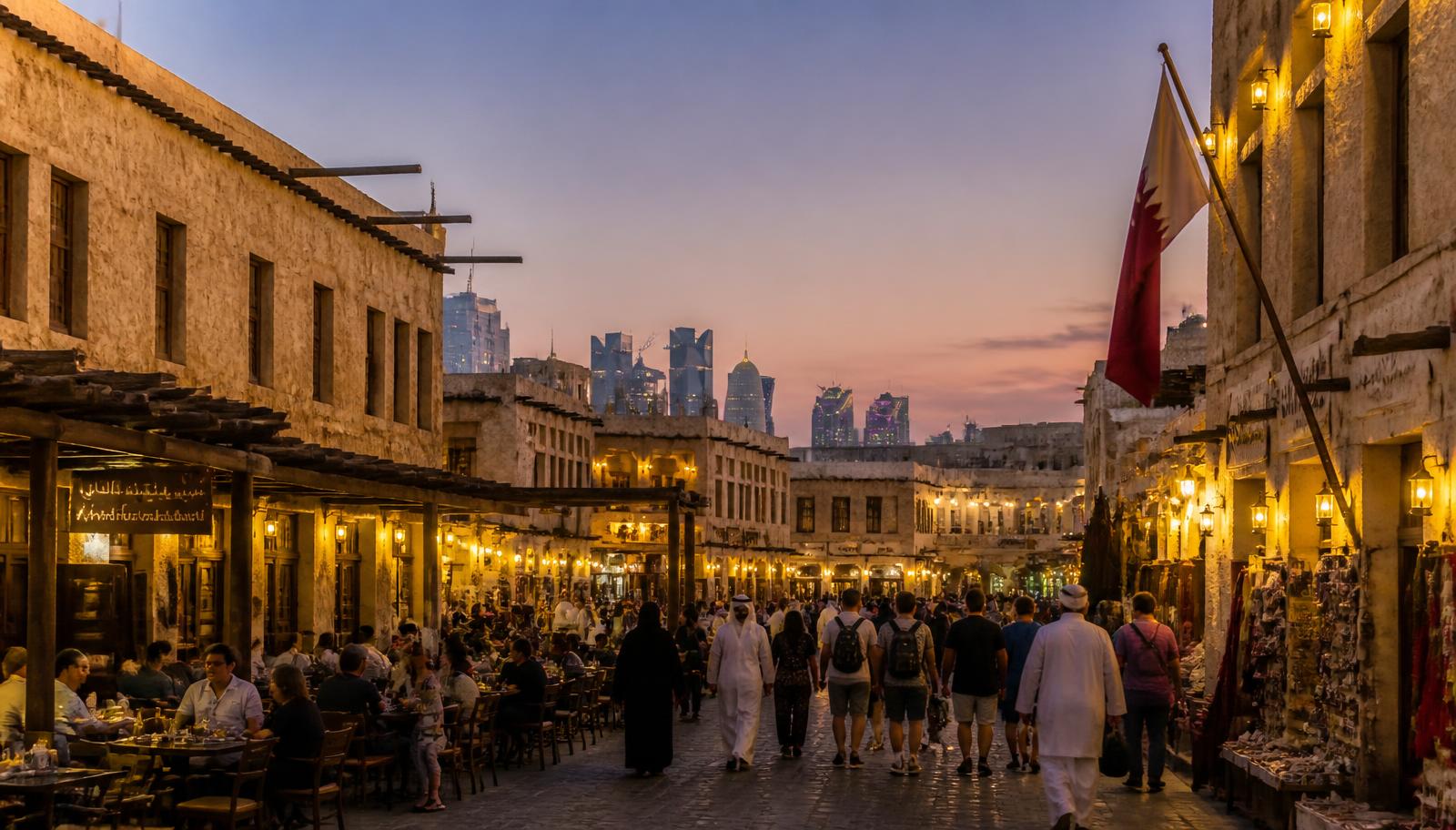
Qatar's contribution to this story is different — not an excavation, but a deliberate act of civic memory. Msheireb Downtown Doha, opened in 2022 after more than a decade of construction, is described by its developers as the world's first fully sustainable downtown regeneration project, and it sits exactly where old Doha's original commercial heart used to be, a few minutes from Souq Waqif and the Corniche.
Rather than flatten the district's history to build glass towers, the project's architects reverse-engineered traditional Qatari building principles — shaded colonnades, wind-responsive street orientation, thick walls, courtyard logic — into contemporary construction, and restored four original heritage houses into museums rather than demolishing them. One of the four, Bin Jelmood House, is dedicated entirely to Qatar's history with the regional slave trade and the human cost behind the pearling economy that predates oil — a subject most Gulf tourism narratives skip entirely, and one Msheireb built a museum around instead of around it. It's the most honest single building in the Gulf's new wave of heritage architecture, and worth an hour regardless of what else is on your itinerary.
What the UAE Adds to the Story
Next to Diriyah's mud walls and Hegra's rock tombs, the UAE can feel like the region's outlier — all glass and speed, built forward rather than restored backward. But its older layer is there if you look for it: Al Fahidi in Dubai, a wind-tower merchant quarter predating the skyline by a century, and the Emirati tradition of the majlis — the seating room built specifically for hosting, conversation, and the ritual pouring of cardamom-spiced Arabic coffee (gahwa) from a long-spouted dallah — still structures how hospitality works across the country, glass towers notwithstanding. Falconry, too, isn't a tourist performance here so much as a genuinely maintained tradition; the UAE still issues falcon passports, and desert camps built for visitors sit alongside working falconry clubs that predate the country itself.
Stay Connected Across the Gulf
Skip roaming fees. Get instant eSIM data in Saudi Arabia, Qatar, the UAE, and 190+ countries.
Get Your Middle East eSIM →Reading the Region as One Story
Put together, these aren't four disconnected stops — they're one continuous story about how fast a region can modernize without agreeing to forget itself. Diriyah is the founding myth in mud-brick form. Hegra is the trade-route inheritance most visitors still overlook. Al-Balad is the pilgrim gateway that built the coast's wealth. Msheireb is the newest chapter, arguing in concrete and glass that heritage and a skyline don't have to be opposites.
The best way to see it is slowly, and out of season if you can manage it — AlUla and Riyadh are at their most livable between October and March, when desert daytime temperatures sit in the comfortable teens and twenties rather than the summer's extremes. Go expecting towers, and you'll get them. Go looking for the mud walls underneath, and you'll get a far better trip.
One practical note if you're stringing this route together across all three countries: Riyadh, Doha, and Dubai sit close enough that a single trip through Saudi Arabia, Qatar, and the UAE is easy to plan back-to-back rather than as separate holidays — and since each is its own network and border, it's worth sorting your connectivity once for the whole route instead of at each new airport. See our Saudi Arabia eSIM, UAE eSIM, and Qatar eSIM pages, or the Middle East regional eSIM if you're covering all three on one plan.
Final Thoughts
The Gulf's glass towers are real, and they are impressive. But the region's older layer — mud, rock, coral, and memory — is what gives a trip here depth. Plan for both, and you'll leave with a far better understanding of how this part of the world became what it is.
Frequently Asked Questions
Is Hegra open to tourists?
Yes. Hegra, also known as Mada'in Salih, is open to visitors and is far quieter than Petra. Entry is typically arranged through guided tours, and the site is part of the wider AlUla region.
When is the best time to visit Saudi Arabia, Qatar, and the UAE?
October through March is ideal. Daytime desert temperatures are mild, and outdoor sites like Diriyah, Hegra, and Al-Balad are far more comfortable to walk.
Do I need a separate SIM card in each Gulf country?
Not necessarily. A regional Middle East eSIM can cover Saudi Arabia, Qatar, and the UAE on one plan, which is more convenient than buying a new SIM at every border.
What should I wear when visiting heritage sites in the Gulf?
Dress modestly. Shoulders and knees should be covered at religious and heritage sites. Lightweight, loose clothing is best for desert heat.
Is Al-Balad in Jeddah worth visiting?
Yes. Al-Balad is a UNESCO-listed old town with coral-stone houses, carved wooden rawashin, and excellent evening food and coffee culture.
Can I visit Msheireb Downtown Doha for free?
Yes. Msheireb is a public district with free access. The heritage houses, including Bin Jelmood House, are open to visitors.
Back to blog