July 2026 Global Pulse: The Complete Travel System for the World's Biggest Month in Sport
Introduction: The Month That Ends Arguments
Every year, travelers debate which month is the hardest to navigate.
March has its conferences. May has its festivals. September has its fashion weeks and international summits.
But July 2026 ends the debate.
Not because it has the most events. But because it has the most consequential ones — stacked, overlapping, and spread across three continents simultaneously. The FIFA World Cup reaches its final. Wimbledon crowns its champions. The Commonwealth Games open in Glasgow. Bastille Day transforms Paris. Kyoto's Gion Matsuri fills the streets with lanterns and two thousand years of tradition.
And beneath all of that, something else is happening.
People are moving. Not casually — urgently. Fans are crossing borders to follow their national teams through knockout rounds. Athletes and delegations are flying into Glasgow from fifty-six nations. Journalists are pivoting between World Cup venues and European cultural events in the same week. Families are navigating Tokyo's festival corridors while simultaneously tracking scores from stadiums in New Jersey, Toronto, and Mexico City.
July 2026 is not a travel month. It is a travel system — one that rewards those who prepare for it and punishes those who don't.
This guide is not about what to see. You already know what you want to see.
This guide is about how to function when the entire world is trying to do the same thing at the same time.
Part One: Understanding What July 2026 Actually Is
Before we break down destinations and events, it's worth stepping back and understanding the structure of the month itself. Because July 2026 is not like previous Julys. It is not even like the World Cup Julys of the past.
It is categorically different.
The Three-Layer Problem
Most major global events create what planners call a single-point surge — one city, one venue, one concentrated burst of pressure. A city absorbs the crowd, manages the load, and recovers.
July 2026 creates a distributed surge — simultaneous pressure across dozens of cities, spread across three host countries for the World Cup alone, plus parallel surges in London, Glasgow, Paris, Kyoto, and beyond.
This matters for travelers in a way that is easy to underestimate.
When a single-point surge happens, the infrastructure adjusts. Extra transport. Additional coverage. Temporary solutions that work reasonably well because they are concentrated in one place.
When a distributed surge happens, every system is under pressure everywhere, all at once. Mobile networks in sixteen World Cup host cities — from Los Angeles to Toronto to Guadalajara — are simultaneously handling millions of extra users. Hotels are full across borders. Flights between host cities are sold out weeks in advance. And the digital infrastructure that modern travel depends on — maps, translations, tickets, communications, payments — is being used by more people, in more places, at higher intensity than at any other point in the year.
Understanding this is the first step to navigating it.
The Border-Crossing Traveler
The 2026 FIFA World Cup is the first edition in history to span three countries simultaneously. For fans, this creates a new kind of journey that has never existed before in football: the multi-country follow.
Attend your team's group stage matches in one host city. Cross the border — by plane, by road, by train — to follow them into the round of sixteen. Then again for the quarterfinals. Then again.
By the time the final arrives at MetLife Stadium in New Jersey on July 19th, some fans will have crossed international borders four or five times in a single month. Each crossing brings new networks, new systems, new data environments — and new opportunities for connectivity to fail at the exact moment it matters most.
This is the traveler July 2026 is designed for. And this is the traveler who needs to be the most prepared.
The Spectator Who Stays Put
Not everyone following July 2026 is physically moving across borders. Millions of travelers are attending one event — one World Cup match in their host city, one Wimbledon semifinal, one Gion Matsuri evening in Kyoto — and staying put for the rest.
But even this traveler faces the July challenge.
Because the crowds around them are not local. The person trying to book the same restaurant, navigate the same street, or connect to the same mobile network is coming from somewhere else. The pressure on local systems is not generated by residents — it is generated by the global influx.
And that means even the traveler who doesn't move still needs to be prepared for an environment that is operating at a level of intensity far beyond its normal baseline.
Part Two: The FIFA World Cup — Three Countries, One Migration
The FIFA World Cup 2026 unfolds across the United States, Canada and Mexico.
Let's start with the event that defines everything else.
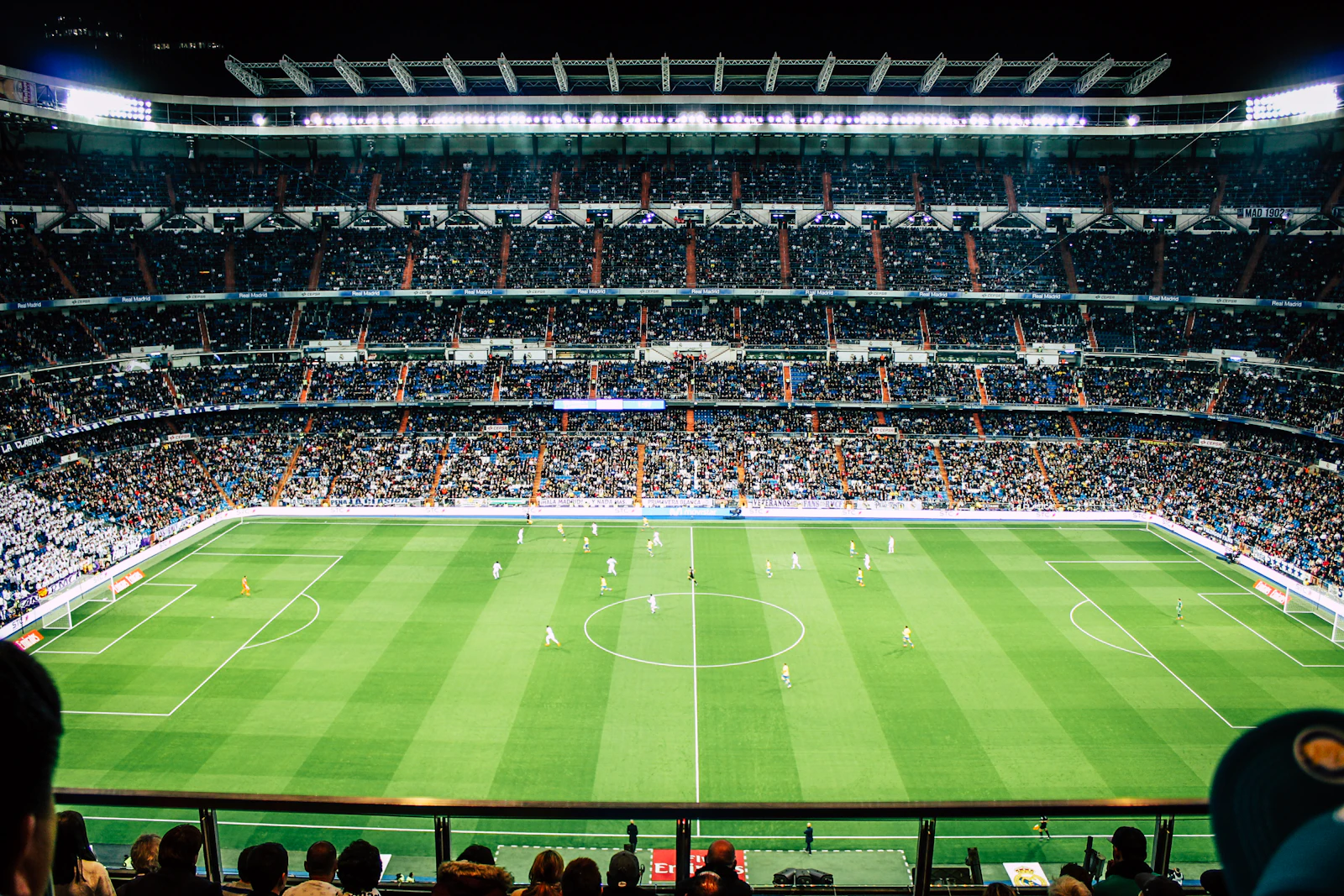
The 2026 FIFA World Cup is the largest sporting event in human history. Forty-eight teams. Eighty-eight matches. Sixteen host cities across the United States, Canada, and Mexico. A potential global audience that exceeds five billion people. And on the ground — in the stadiums, the fan zones, the airports, the streets — millions of fans from every nation on earth, all moving simultaneously through a tri-continental system that has never been tested at this scale before.
To understand July specifically, you need to understand where the tournament stands at the start of the month.
By July 1st, the group stage is over. The dust has settled. Thirty-two teams have become sixteen. And now the tournament enters its most brutal, most beautiful, and most chaotic phase: the knockout rounds.
The Knockout Dynamic
Group stage matches are distributed. Fans know where their team is playing weeks in advance. They book hotels, arrange transport, plan around fixed dates. The system, while complex, is at least somewhat predictable.
Knockout rounds are different.
Results happen on Tuesday. The next match is on Sunday. In a different city. Possibly in a different country.
Fans don't find out where they're going until the match ends. Then they have roughly four days to get there.
For a tournament spread across three countries, this creates a logistical scramble that happens simultaneously across hundreds of thousands of people. Flights fill up within hours of results. Hotels' prices surge within minutes. Transport links between host cities — some in the same country, some requiring border crossings — suddenly become the most contested infrastructure in the hemisphere.
And in the middle of all of this, the fan is standing in a stadium in Vancouver, Canada, trying to book a flight to Dallas, Texas, while their signal is being shared with fifty thousand other people doing exactly the same thing.
The Host Cities: What Each One Demands
Los Angeles operates at a scale that is difficult to comprehend until you're inside it. As one of the most car-dependent major cities in the world, it also happens to be hosting some of the tournament's most anticipated matches. The combination of World Cup crowds and LA's existing infrastructure pressures creates an environment where navigation is everything. Getting from a hotel in Santa Monica to SoFi Stadium in Inglewood during World Cup traffic is not a twenty-minute drive. It is a coordination problem. Real-time information is not optional.
New York / New Jersey hosts the final. MetLife Stadium in East Rutherford, New Jersey, sits in the most densely networked urban area in North America — but also one of the most congested. On the final day, July 19th, the region will experience a level of simultaneous mobile data demand that its networks have never seen before. Backup navigation, pre-downloaded maps, and offline contingency planning are not overcaution. They are basic preparation.
Miami combines World Cup intensity with its own baseline of high-season tourism. The city is already at near-capacity in July. Add fifty thousand additional international visitors for each match day, and the result is a system under pressure at every level — transport, hospitality, mobile networks, and everything in between.
Toronto and Vancouver represent the Canadian dimension of the tournament — and a different kind of traveler experience. Both cities are genuinely world-class in their infrastructure. But the Canada-US border crossing that many fans will need to make — following their teams south — is subject to processing times, documentation requirements, and system loads that are not always predictable during high-demand periods.
Guadalajara and Mexico City bring the tournament's Latin American energy. For fans traveling into Mexico from the US or Canada, the experience shifts dramatically — different mobile networks, different infrastructure standards, different environments that require different preparation. For South American fans arriving directly, the cultural navigation is more familiar, but the logistical pressures are the same.
What the World Cup Actually Tests
The FIFA World Cup is not just a football tournament. For July 2026, it is the largest real-world stress test of mobile connectivity, real-time navigation, and digital travel infrastructure that has ever been conducted.
Every fan attending a match is relying on digital access to get there — their ticket is digital, their transport is booked through an app, their hotel address is saved in their phone, and their communication with traveling companions runs through messaging platforms.
Remove that access for twenty minutes in the wrong situation — in an unfamiliar city, in a different country, in a crowd of sixty thousand people — and the experience doesn't just become inconvenient. It becomes genuinely disorienting.
The fans who move through July's World Cup weeks smoothly are the ones who treated connectivity as infrastructure before they left home — not as something to sort out on arrival.
Part Three: United Kingdom — Wimbledon, Then Glasgow

Wimbledon fortnight turns SW19 into the busiest postcode in London.
While the World Cup moves across North America and Mexico, two of the most significant events of the British sporting calendar are unfolding simultaneously on the other side of the Atlantic.
Wimbledon: The 12th of July
The Championships, Wimbledon — to give it its full name — is one of the most recognisable sporting events on the planet. But it is also one of the most specific. Unlike the World Cup's distributed geography, Wimbledon is compressed into nineteen acres of grass courts in southwest London, and it draws an audience — in person and digitally — that is profoundly international.
The Wimbledon Finals on July 12th represent the peak of that compression.
Tens of thousands of people are present at the All England Club. Millions more are watching globally — and many of them are watching while travelling. In London's public transport, in hotel lobbies in Tokyo, in airports across three continents, the Wimbledon final is playing on screens while people are simultaneously trying to get somewhere.
For the traveler who is at Wimbledon — queuing from early morning for a place on the hill, navigating the transport links from central London — the day is long, intense, and logistically demanding. SW19 on finals day is a system that requires patience, good information, and reliable access to real-time updates about transport, queues, and scheduling.
For the traveler who is not at Wimbledon but is in London during the same week — which includes millions of tourists who have nothing to do with the tournament — the effect of finals week on the city's transport and hospitality infrastructure is real and measurable. London in July is already its busiest. Wimbledon week adds a layer on top of that.
Glasgow: The Commonwealth Games Open (July 23rd)
Nine days after Wimbledon crowns its champions, the world's attention shifts north.
The 2026 Commonwealth Games open in Glasgow on July 23rd. This is not a minor event. The Commonwealth Games bring together athletes from fifty-six nations across the Commonwealth — from Australia and India to Jamaica and Nigeria — and the host city transforms to accommodate them.
Glasgow in late July 2026 is a city operating in a genuinely different mode.
The venues are spread across the city. The athlete village changes the residential geography of the east end. International delegations, media teams, and sporting bodies are operating in every hotel, every conference space, and every transport corridor simultaneously.
And the fans — both local and international — are navigating a city that is beautiful, walkable, and genuinely world-class in hospitality, but that is also under a level of pressure it experiences only during events of this magnitude.
For travelers who are attending the Commonwealth Games, the challenge is one of scale and simultaneity. Multiple sports are running in multiple venues across the city on the same day. Coordination between groups becomes complex. Transport between venues needs to be planned, not assumed. And in a city where the mobile networks will be handling demand from athletes, officials, media, and spectators all at once, the moments when you most need reliable access are exactly the moments when the system is under the most pressure.
Glasgow is also, for many international visitors, an unfamiliar destination. Unlike London, which most international travelers have visited before, Glasgow represents new geography — new transport systems to learn, new urban layouts to navigate, new environments to interpret in real time.
That unfamiliarity, combined with the scale of the event, is where preparation makes the difference.
Part Four: France — Bastille Day and the Peloton
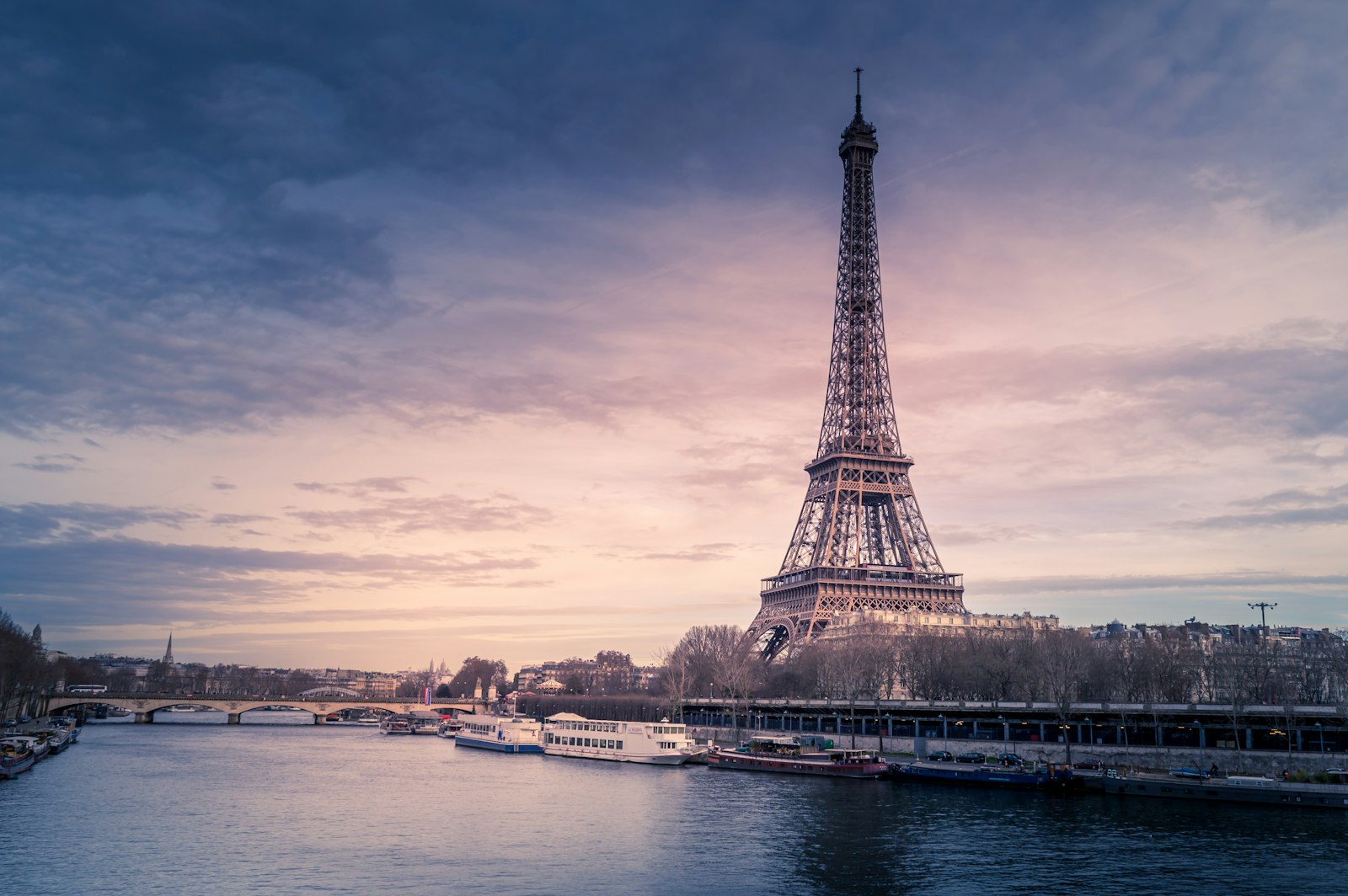
Paris on 14 July: fireworks over the Champ de Mars and the Tour de France in motion.
On July 14th, France transforms.
Bastille Day is not simply a national holiday. It is a national expression — a day when France's cities, towns, and villages simultaneously organize celebrations that range from the vast military parade on the Champs-Élysées to fireworks above village squares that hold fewer than a thousand people.
For international travelers, Bastille Day in Paris is one of the most emotionally resonant travel experiences the continent offers. The parade draws hundreds of thousands of spectators. The Eiffel Tower fireworks at night draw hundreds of thousands more. And in between, the city's cafés, restaurants, and public spaces are animated by a version of French national identity that is rarely on display in quite this way at any other time of year.
But — and this is important — Bastille Day in Paris is also one of the most logistically intense days in the French capital's calendar.
Transport is disrupted by parade routes. Crowds in key areas make navigation difficult without real-time information. The windows of opportunity — to be at the right point on the Champs-Élysées before the barriers close, to find your way to a viewpoint for the fireworks before the spaces fill — are narrow, and they close fast.
The traveler who navigates Bastille Day well is the one who treats it as a coordination exercise, not just a spectacle.
The Tour de France: The Moving Event
July 2026 also features the Tour de France — and this year, the race begins in Barcelona, Spain, before working its way through France across the month.
The Tour de France creates a different kind of travel dynamic than almost any other event on the calendar. It is not a destination event. It is a route event — a moving spectacle that passes through towns and regions that are, for that single day, at the center of global cycling attention.
For travelers following the Tour, the challenge is tracking a moving target. The stage starts and finishes shift daily. The route passes through remote alpine terrain, medieval towns, and urban centers in rapid succession. Spontaneous viewing requires the ability to find real-time stage information, navigate to roadside positions, and coordinate with others across a moving geography.
For travelers who encounter the Tour without planning to — driving through a French village, arriving in a town the day before a stage passes — the ability to understand what is happening and adapt to it quickly is what separates a delightful surprise from a frustrating disruption.
Both experiences — the dedicated follower and the accidental spectator — are defined by the same thing: access to real-time information in a country that may not be your home network.
Part Five: Japan — The Festival Corridor

Kyoto's Gion Matsuri fills the streets with lanterns and centuries of tradition.
In July, Japan enters one of its most visually and culturally intense periods of the year.
The summer festival season — matsuri — transforms the country's cities into something that is genuinely difficult to describe to anyone who hasn't experienced it. Streets that are navigated efficiently on every other day of the year become rivers of people, light, sound, and tradition. Yukata-clad crowds move through neighbourhoods where every surface carries meaning. Food stalls, portable shrines, taiko drums, and the specific quality of summer night air in Japan combine into an experience that sits outside the normal categories of tourism.
Gion Matsuri: The Month-Long Centrepiece
Kyoto's Gion Matsuri is Japan's most famous festival — and one of the world's oldest. Running throughout the entire month of July, with its major processions on July 17th and July 24th, the festival has been observed continuously since 869 AD.
The Yamaboko Junko processions — where enormous, elaborately decorated floats weighing several tons are pulled through Kyoto's central streets by teams of hundreds — draw hundreds of thousands of spectators. On procession days, the streets around Shijo and Kawaramachi are among the most densely crowded public spaces in Japan.
For international travelers, Gion Matsuri is an experience that requires a specific kind of preparation. Kyoto is not Tokyo — it is a smaller city with narrower streets, a different transport logic, and a spatial intensity during the festival that can be disorienting if you encounter it without context.
Understanding which streets will be closed. Knowing when the best viewing positions fill. Finding the float assembly areas where the craftsmanship is visible up close before the procession begins. None of this information is obvious without real-time local access.
And in a crowd of that density, navigation failures don't just cost you a viewpoint. They cost you the entire experience, because the window is narrow and the crowds are overwhelming.
Tokyo in July
Tokyo in July is a different proposition from Kyoto, but no less intense.
Summer in Tokyo means heat and humidity that reshape the logic of the city. The underground network — already one of the most complex in the world — becomes a lifeline, not just a convenience. Knowing which lines to take, which exits to use, and how to move efficiently through Tokyo's labyrinthine station interchanges is not a skill you develop on arrival. It is a skill you access in real time, constantly, through navigation tools that depend on data.
Tokyo's summer festivals, the department store food halls, the shifting geography of pop-up events, and the specific knowledge of which gardens offer shade and which are exposed — all of this requires the ability to search, translate, and navigate in real time.
Japan is a country where the infrastructure is genuinely extraordinary. But it is also a country where the gap between having real-time digital access and not having it is larger than almost anywhere else in the world. The systems are so layered, so specific, and so rewarding when navigated correctly that being locked out of them — even partially — diminishes the experience significantly.
The Fuji Rock Festival (Late July)
For a different kind of traveler, late July brings Fuji Rock Festival — Japan's largest and most celebrated outdoor music event, held at Naeba Ski Resort in Niigata Prefecture.
Fuji Rock draws international artists and international audiences. Getting there from Tokyo requires understanding rail connections that are not intuitive to first-time visitors. The venue itself is a mountain resort transformed into a festival campus that covers significant terrain. Moving between stages, finding accommodation, and communicating with other attendees all depend on the kind of mobile access that mountain environments can make difficult.
For travelers attending Fuji Rock, the lesson is the same one that applies everywhere in July 2026: the experience is exceptional when the logistics work. And the logistics work when connectivity is prepared, not assumed.
Part Six: Scotland — The Commonwealth Games Host City

Glasgow welcomes the Commonwealth Games and a wave of international visitors.
We touched on Glasgow earlier as part of the UK section. But the Commonwealth Games deserve more than a mention in passing. For travelers specifically attending the Games — or traveling to Scotland in late July for any reason — the environment deserves a closer look.
Glasgow as a Games City
Glasgow has hosted the Commonwealth Games before — in 2014 — and it transformed itself for that edition in ways that are still visible in the city's east end today. The Athletes' Village from 2014 became a residential neighbourhood. The velodrome became a permanent facility. The city learned something important about hosting global sport, and it carried those lessons forward.
But 2026 is not 2014.
The global context is different. The scale of international travel is different. The digital demands of athletes, officials, media, and spectators have grown dramatically in twelve years. And the competition for attention — with the World Cup final happening just four days before the Commonwealth Games opening ceremony — means that Glasgow needs to absorb an influx of international visitors who are, in many cases, arriving fresh from the World Cup environment in North America or Wimbledon week in London.
That sequence — World Cup → Wimbledon → Commonwealth Games — is one that many sports travelers will follow across the first three weeks of July. Each transition requires a reset: new city, new network, new geography, new systems. The accumulation of those transitions is where preparation becomes most important.
What Athletes and Officials Actually Need
The Commonwealth Games also bring a specific type of traveler that is worth addressing directly: the athlete, the coach, the official, and the delegate.
For this traveler, July is not a leisure experience. It is a professional deployment. Communication with national federations, coaching staff, and family back home runs continuously. Medical consultations, schedule updates, transport logistics, and qualification result tracking all happen in real time, in a city that may be completely unfamiliar.
For the athlete arriving from a country where mobile data is cheap and ubiquitous, the transition to UK networks — with their own pricing structures and coverage patterns — is a practical concern, not an abstract one. Getting it wrong costs time and focus that cannot be recovered during competition week.
Part Seven: The Rest of the World Is Still Moving
We've covered the headline events. But July 2026 is not only about FIFA, Wimbledon, Bastille Day, Gion Matsuri, and the Commonwealth Games.
It is also about the tens of millions of travelers who are not attending any of these events specifically, but who are moving through a world that is shaped by all of them simultaneously.
The Ripple Effect
When sixty thousand fans attend a World Cup match in Miami, the effect is not contained to the stadium. It radiates outward: into the hotel corridors, the airport departure halls, the Uber queues, the restaurant reservation systems, the mobile networks across the city.
For a traveler in Miami in July who has nothing to do with the World Cup — a business traveler, a family on a beach holiday, a conference attendee — the World Cup is still the dominant condition of the environment they're moving through. Transport is affected. Hotels are at capacity. The digital infrastructure serving the city is under pressure.
This ripple effect operates everywhere in July 2026, where a major event is taking place. And since major events are taking place on multiple continents simultaneously, the ripple effect is global.
The Southern Hemisphere: Watching, Not Visiting
Australia, New Zealand, South Africa, and the rest of the Southern Hemisphere are not hosting July's headline events. But they are not passive observers either.
For fans in these countries, July 2026 means consuming the World Cup, Wimbledon, and the Commonwealth Games across time zones that are profoundly inconvenient. The World Cup final in New Jersey kicks off in prime time on the US East Coast — which means it starts at 3 or 4 in the morning in Sydney and Auckland. Wimbledon morning sessions are broadcast in the early hours across Africa and the Pacific.
This global, distributed viewership shapes travel in ways that are easy to overlook. Fans who are watching from home are booking travel for later — inspired by what they see in July to visit New York, London, or Glasgow in months ahead. Travelers who are physically in transit — in airports, in hotels, in transit zones — need reliable access to follow events that matter to them while simultaneously managing their own journeys.
The Southern Hemisphere doesn't host July 2026. But it participates in it fully, from a distance.
Part Eight: The System Behind Every Experience
Every itinerary in July 2026 runs on the same hidden layer: connectivity.
We've traveled across North America, through Europe, into Japan, and around the world. We've looked at events that range from football finals to lantern festivals to military parades to mountain music stages.
And across all of it, the same pattern emerges.
The quality of the experience is not determined by the event itself. It is determined by how effectively the traveler moves within the environment that the event creates.
This is the insight that separates travelers who emerge from July 2026 with the experiences they hoped for from those who remember it primarily as chaotic, exhausting, and fragmented.
The Three Variables That Decide Everything
Movement is the first variable. How quickly and smoothly you transition from one position to another — between venues, between cities, between countries, between languages, and between networks and systems. In July 2026, movement is almost always under pressure. There are more people going to the same places, more competition for the same transport, and more congestion at the same chokepoints. The traveler who moves smoothly is the one who has already solved the information problem before they need to move.
Timing is the second variable. July 2026 is a month of windows — of opportunities that open briefly and close fast. The best viewing position at Bastille Day fireworks. The gate at Gion Matsuri before the barriers go up. The flight that still has seats three hours after your team wins in extra time. The traveler who acts at the right moment is the one who has access to information in real time, without delay, without buffering, without the thirty-second wait for a page to load on a network that's handling ten times its normal load.
Access is the third variable — and the one that makes both of the others possible. Real-time decisions require real-time information. Real-time information requires real-time connectivity. And real-time connectivity in July 2026, across sixteen World Cup cities and multiple parallel global events, requires preparation that is done before departure, not after arrival.
The Moment the Gap Becomes Visible
There is a specific moment — every traveler who has experienced it knows exactly what it feels like — where the gap between being connected and not being connected becomes viscerally obvious.
You're in a crowd. You need to navigate. Your phone shows no signal. The app won't load. The map is greyed out. And everyone around you is moving with purpose while you are standing still, holding a device that is not helping you.
In that moment, it doesn't matter how well you planned everything else. The experience is reduced to that single failure.
July 2026 will create that moment for thousands of travelers who didn't prepare. It will eliminate that moment entirely for thousands of others who did.
The difference is not technical sophistication. It is not a travel experience. It is not knowing the right tricks.
It is simply having active, functional, local data access before you need it — not after the moment has passed.
Why Local Data Matters More in July Than Any Other Month
Every month of the year, travelers use data when they travel internationally. They roam on their home plans, they hunt for wifi, and they download offline maps before they land.
July 2026 is different because the environments are different.
A World Cup knockout venue in New Jersey doesn't have spare wifi. The Gion Matsuri procession route doesn't have a café with a password to share. The Bastille Day crowd on the Champs-Élysées doesn't thin out enough to find a quiet corner with a good signal.
Crowds are at their maximum density
Shared networks are at their maximum load
The need for real-time information is at its highest
And the tolerance for connectivity failure is at its lowest
This is the combination that makes local data — active, pre-installed, running before you land — not a travel convenience but a travel necessity in July 2026.
Part Nine: Preparing for July — The Practical Framework
We've spent most of this guide on the why. Let's end with the how.
Before You Depart
The most important decisions you make for July 2026 travel are made before you leave home. Not at the airport. Not on arrival. Before.
Know your itinerary to the level of countries, not just cities. If you're following the World Cup, understand which border crossings you might need to make depending on results. Have contingency plans for each possible outcome. Know which countries you'll be in and in what sequence.
This isn't about being rigid — it's about knowing your data environment in advance. The US, Canada, and Mexico are three separate mobile networks. France, the UK, and Japan are three more. Knowing your sequence means you can have the right connectivity ready for each stage.
Download what you can before you need it. Offline maps for your host cities. Venue guides. Transport apps. Translation packages. None of this replaces real-time access, but it backstops it — giving you something to work with in the moments when even good connectivity is temporarily overloaded.
Tell your travel companions your plan. The most common connectivity failure in group travel is not technical — it's organizational. People assume someone else has sorted it. No one has. In a World Cup crowd in Dallas or a festival corridor in Kyoto, being separated from your group without a way to communicate is the kind of problem that takes hours to resolve.
At the Destination
In high-density environments — stadiums, procession routes, festival grounds — treat your data like a battery. Use it for what matters: navigation, communication, tickets, and payments. Don't buffer video in a stadium queue and then find you have no signal when you need your digital ticket at the gate.
Learn the offline capabilities of your essential apps before you need them. Most navigation apps, most transport apps, and most venue apps have offline modes that most people never activate because they've never needed to. July 2026 is the month you'll need to.
Identify your fallback points. In every city you visit, know at least one location — a hotel lobby, a specific café, a transport hub — where you know you have reliable wifi access if everything else fails. It's a backup you'll probably never use. But having it means you never have the experience of being genuinely stuck.
The Cross-Border Sequence
For World Cup fans specifically: the multi-country follow is genuinely manageable, but it requires treating each border crossing as a connectivity reset. When you cross from Canada into the US, your Canadian data plan doesn't follow you. When you cross from the US into Mexico, the same thing happens in reverse.
The travelers who navigate the World Cup's multi-country geography smoothly are the ones who have local data active for each country they'll be in before they arrive — not after they land and find themselves in a stadium queue with no signal and a digital ticket that won't load.
Conclusion: The World Doesn't Pause in July
May 2026 compressed the calendar.
July 2026 ignites it.
The World Cup Final. Wimbledon. Bastille Day. The Commonwealth Games. Gion Matsuri. The Tour de France. These are not modest events happening in quiet corners of the world. They are the loudest, most attended, most globally watched events of the year, happening simultaneously across every time zone.
And none of them will slow down for you.
The fans who experience July 2026 the way they imagined it — the ones who find the right position at the right moment, who navigate the right route through the right crowd, who book the right flight in the hour after the result, who meet their group in a sea of sixty thousand people — are the ones who treated preparation as part of the journey.
Not as a logistical box to tick. But as a genuine investment in the quality of what comes next.
Move early. Stay ready.
And stay connected to everything that matters — before July starts moving without you.
Ready for July 2026?
Whether you're following the World Cup across three countries, attending the Commonwealth Games in Glasgow, or navigating Kyoto's Gion Matsuri in the summer heat, your connection should be ready before the first match kicks off.
Disclaimer: This guide is for informational purposes only. Event schedules, dates, and travel conditions may change. Connectivity performance depends on local infrastructure and network availability. Please verify all event details with official sources before traveling.
This article is created by FastAlo and may include promotional content related to our services. Information is provided for general guidance and may change over time.
FastAlo is a trading name of Fastsim Ltd., a UK-registered company. FastAlo is a global eSIM connectivity provider helping travelers stay online anywhere in the world without roaming or physical SIM cards.
Back to blog